Return to list
Amia and Veronafiere: allies in differential waste collection: the virtuous case of Vinitaly
Vinitaly
April 7 2022
Veronafiere and Amia have collaborated for a long time to ensure the differential collection of waste during exhibitions to ensure that sector operators and exhibitors experience a totally clean and tidy environment in the Exhibition Centre. What exactly do these operations involve?
Amia and Veronafiere have been partners since the Exhibition Centre was smaller than it is today. Over the years, the Verona Exhibition Centre has significantly expanded exhibition spaces and opened out into the world. Over time, we have organized and managed a system whereby we achieve well over 80% of differential waste collection; figures vary greatly depending on the event, since each one has its own special features. Amia handles everything concerning the recovery of waste materials (but not stand cleaning) arising from set-up and dismantling stages, while during the event as such the waste produced essentially derives from meals or snacks at the refreshment facilities around the Exhibition Centre. Vinitaly is an exception because it is famously where quality wines from all over the world are tasted - and quality wines are packaged in glass bottles. Historically speaking, we activated differential collection of glass with Veronafiere through two systems. One system with large bell-shaped containers located outside all access doors to the show halls where exhibitors can dispose of their bottles, or an on-stand service whereby Veronafiere through Amia provides a glass collection bin on stands, which exhibitors leave in the aisles at the end of the day for correct disposal. Thanks to this system, in 2019 we collected almost 200 tonnes of glass. This is a very positive result because glass in Italy it is one of the leading materials suffering from shortages. Over time, we have managed to improve awareness among exhibitors so that they are now surprised if they do not find the bins for collecting empty glass bottles, which they now consider as an item of furniture. Every year, Amia makes new containers available and upgrades some of them externally to ensure the visual quality of the product-service.
Differential waste collection is also ensured for wine lovers who enjoy Verona's splendid historic centre during the Vinitaly and the City off-show event. What operations are planned in the city?
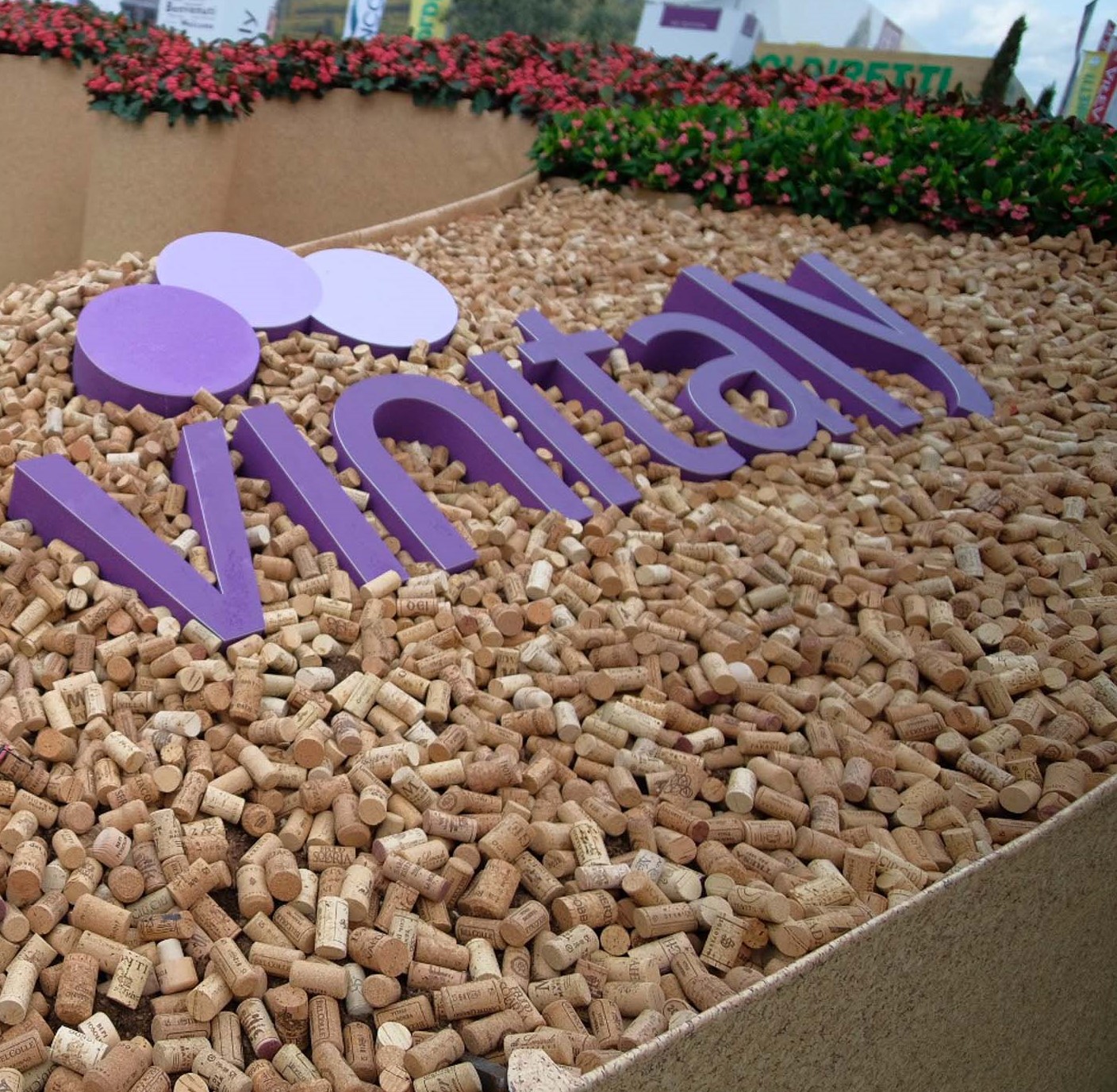
This year, Vinitaly and the City is hosted in Piazza dei Signori and Cortile del Mercato Vecchio, architecturally enclosed locations that will resemble wine cellars. During the off-show event, in addition to classic cleaning of the historic centre, we also ensure the collection of all waste materials: plastic, cork, cardboard and glass. In addition, we provide containers to collect corks - a valuable item - since this is the main time of year when corks are disposed of in Verona. No difficulties are involved in collecting cork: it is an odourless waste material and, thanks to a relationship going back for more than ten years with the largest cork producer in the world, we deliver all collected cork which is paid for. The money raised is then used to finance the activities of an association based in Verona involved in studies into leukaemia. This collaboration means that an important social aspect is also achieved.
Let's take a closer look at the question of glass. Since Vinitaly is an event for the wine business, where buyers and operators spend a great deal of time tasting and consuming products, what impact does collecting glass bottles have on the differential waste operations in the Exhibition Centre?
Vinitaly in five days is equivalent to all the glass collected in the city of Verona in a single year. Every day, we take about 70 cubic metres of glass bottles away from the Exhibition Centre, most of which are already made from recycled glass because Italy is historically a country where glass has been collected and re-used for a long time so that all the coloured glass these bottles are made of is already recycled. This is very useful for the environment since few people are aware that every 10% of recycled glass used in glass-making furnaces instead of virgin material achieves a 5% reduction in emissions into the atmosphere. Therefore, making glass from recycled materials ensure 50% less emissions into the atmosphere, re-using a material that would otherwise be tipped in a landfill, thereby avoiding the use of scarce raw materials.
Collecting glass for recycling is an historic mission at Vinitaly which greatly benefits the environment. In any case, wine cellars work in a natural environment and more producers than ever now operate in full respect of nature through conversion to organic practices and reducing the use of pesticides. The world of wine is among the first to have an interest, like the agricultural world as a whole, in protecting the environment. Vinitaly is no exception and indeed, has always organized this kind of collection with Amia, which makes new containers available every year: they are attractively designed, given the status of the trade fair, and the equipment is constantly renewed to ensure the highest visual quality and service.
Could you give us a clear definition of the Circular Economy? What can we do to develop the future of sustainability?
Essentially, Circular Economy seeks to avoid using new raw materials. It means reusing an asset that has already been on the market by transforming it to create a new asset. The classic item is an aluminium can that is smelted to make a new one. The same applies for bottles that are smelted to create new bottles. The circular economy helps avoid generating waste and using new raw materials. The first thing is to ensure differential collection and then use the materials collected in this way. For example, for cardboard packaging we emphasise products made from recycled cardboard and not virgin material. When we buy bottles to bottle wine, we should make sure that they come as far as possible from recycled material. If we collect waste separately but no one uses these materials - known technically as firsts and seconds - obtained from such collection, then we are left with bottle cones that we do not know where to put. If the circular economy is actually to take hold as the promoted by European Union - which has the best performance in the world - then we must use materials obtained from recycling. The legislative goal for differential collection is 75% - and we have achieved 76%. In the trade fair context, there are always certain difficulties arising from the management of high peaks of material to be collected. Nevertheless, we have a series of important reference systems where the materials we collect are sent and can be divided into various components. During Vinitaly, we are able to fill these systems to maximum capacity: a virtuous example is that all the glass is delivered to an important company near Verona for recycling.
The alliance between Veronafiere and Amia not only promotes good practices for the community but is also capable of transforming problems into resources in full respect for the world we live in.