VIA Verona 2026 Tasting Sessions 5 and 6 led by Sarah Heller MW and Andrea Lonardi MW
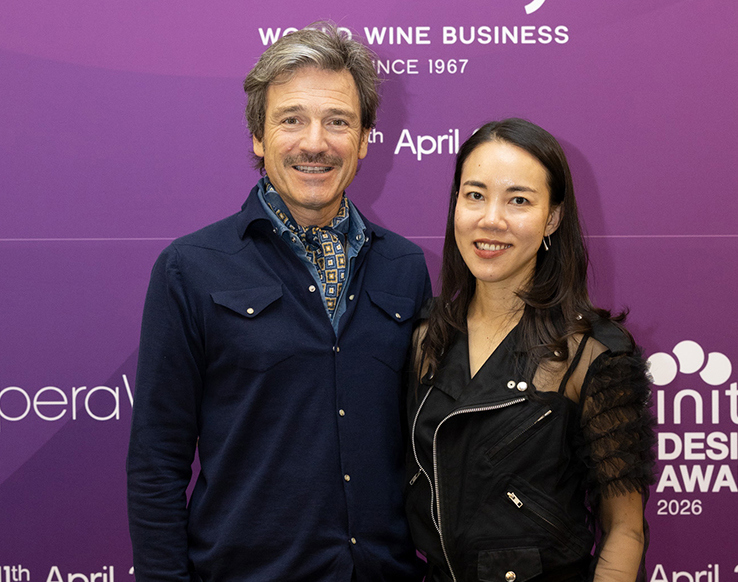
Tasting Sessions 5 and 6 led by Sarah Heller MW and Andrea Lonardi MW
Today is the penultimate day of VIA Verona 2026, and the underlying focus of these final tasting sessions was the blind tasting component of the final exam, which takes place on the last day of the program. The exam itself is notoriously challenging, so these tasting sessions represent the final opportunity for students to calibrate their palates and draw from the knowledge and expertise of Faculty lead Sarah Heller MW, joined today by Andrea Lonardi MW.
While these notes aren’t exhaustive, they are intended to give an insight into the Vinitaly International Academy (VIA) approach to wine tasting and share a flavor of the insights and expertise on offer.
Andrea Lonardi, one of four Italian Masters of Wine, attending Vinitaly International Academy’s flagship Verona course for the fourth time, is a local, from Valpolicella, with a broad range of industry experience both in the technical field of winemaking and the commercial aspects of the wine market. He has developed the concept of Italianity to express the unique culture of Italian wine.
Flight 1: Blind Tasting
The first guided blind tasting of the day is intended to give participants more practice ahead of the final exam. Tasting is a core part of the VIA curriculum, where students sample 100s of wines in order to master the vast diversity of Italian wine. Starting the day with a blind tasting also allows the group to calibrate its palate ahead of another long and intensive day of tasting.
The exam itself includes the blind tasting of two wines (a red and white), a 20-minute sensory evaluation requiring candidates to correctly identify native grape varieties, regions, and quality levels using the VIA Systematic Tasting Grid. The Tasting Grid is a specialized, pedagogical tool designed by VIA faculty to evaluate Italy’s diverse native grapes, terroir, and traditional winemaking techniques. As well as evaluating color, nose (intensity/concentration) and palate, unlike general tasting methods, the VIA Grid separates wine intensity from concentration and emphasizes textural, phenolic character (tannins/texture) for red and white wines.
In her opening remarks, Sarah Heller emphasized the importance of prioritizing well-being ahead of the final exam, highlighting the need to get a good night’s sleep (if possible!) and to arrive for the exam in a calm and focused frame of mind. The VIA exam demands advanced knowledge beyond standard wine certifications, focusing on the highly fragmented and regionalized nature of Italian viticulture.
With the wine poured, students were given five minutes to conduct their olfactory analysis of one red and one white wine.
Andrea Lonardi offered his observations on the wine, starting with color, before moving on to nose, palate and finish. Sarah introduced observations on quality and wine making techniques. In relation to the red wine, its dominant characteristic was black pepper. Several Italian wines are known for this distinct black pepper characteristic, which is often caused by a compound called rotundone, particularly in cool-climate or high-altitude expressions, including some Chianti and Sangiovese-based wines, Primitivo, Enantio, Cesanese, Aglianico and some wines from Valpolicella.
Recognizing a wine's dominant characteristic can help to identify where a wine is from, while also eliminating other possibilities.
Flight 2: Sangiovese
According to Andrea Lonardi, this second flight of wines screamed contemporary Sangiovese. Fresher and more reductive than in the past, reflecting the continental climate – cold and windy in the winter and very dry and hot in the summer, which means high harsh tannins, not always well-defined. This is a key difference between Sangiovese and Nebbiolo. It's very easy to confuse Sangiovese with Nebbiolo, but these wines offered a great opportunity for students to explore the difference between the two. Nebbiolo wines generally show a better balance in the glass than Sangiovese.
Flight 3:
The third flight included red wines from Calabria (Gaglioppo), Liguria (Rossese) and Sardinia (Cannonau). While Galioppo’s color may suggest Nebbiolo, on the nose it has distinct fruit characteristics. Sarah outlined the key differences in tannin levels and quality that distinguish each of these grape varieties, as well as the differences in acidity.
Andrea observed that Cannonau can exhibit certain qualities reminiscent of Campari, such as Mediterranean herbaceousness, a bitter-savory finish and distinctive aromatics, though they are generally more subtle and savory than the bitter Italian liqueur.
Andrea Lonardi described the red grape varieties of Italy in terms of a spine which goes from north to south, a concept that he describes in more detail in his book, Italianity. The three pillars of the spine (from north to south) are Nebbiolo, Sangiovese and Nerello Mascalese.
Understanding the concept of Italianity and Italy’s spine of red wines can help students to navigate the complex landscape of Italian grape varieties.
Flight 4: Bordeaux blends
Historically, VIA traditionally focused on native grape varieties, with some exceptions made for the wines of Franciacorta (made with Chardonnay and Pinot Nero, and up to 50% Pinot Bianco), for example. A more flexible approach has since been introduced, reflecting the fact that there is long history of French and German varieties being used in Northern Italy and that international varieties have played an important part in the history and development of Italian viticulture.
Changes in the definition of what autochthonous means, thanks to the contribution of Professor Attilio Scienza, has changed our approach and understanding of Italian wine.
Flight 4: Puglia
In tasting this flight of wines, it is clear that we have changed latitude. The grape varieties included in this flight were Nero d’Avolo, Uva di Troia and Negroamaro. The guided tasting explored the differences between these wines in terms of aromatic characteristics, structure and tannins, as well as some of the recent trends in winemaking and production techniques in the region, and how that has influenced the resultant wine. Prickly pear making its first appearance as a taste descriptor!
To identify the wines of Puglia, look out for intense, rich, and jammy flavors with notes of black cherry, plum, tobacco and anise.
Flight 5: Tannin explosion
The final flight of reds of the day included wines with higher levels of tannins (medium plus or high), which included three from Campania and one from Umbria. The wines from Campania were made with Aglianico while the Umbria wine was made with Sangrantino.
During this flight, Andrea Lonardi emphasized the importance of putting personal opinions to one side when evaluating a wine and of recognizing specific characteristics (like pepperiness in the case of Aglianico) to identify a particular wine. Andrea then listed the Italian varieties that exhibit that distinctive peppery characteristic.
Identifying a wine should be a process of logical deduction rather than instinctive supposition. In blind tasting, the technique of “funnelling” starts with observations about the wine’s characteristics and narrows it down until you reach a few possible grape varieties.
Flight 6 – Sparkling wines
Andrea Lonardi outlined the importance of evaluating quality (indicators of quality might include length, intensity, balance, concentration of flavors, saline qualities) and described two main Prosecco winemaking techniques (traditional and modern) and how these different techniques affect the characteristics of the resultant wine. The two Proseccos tasted in this flight represent each of those techniques.
Andrea then outlined the principal areas in Italy where Traditional Method sparkling wines are made and the history and development of Traditional Method wines in Italy, which is probably older than in Champagne, explaining how Alta Lange in Piedmont was first, with Trento Doc and Franciacorta (now the two dominant areas for Traditional Method) emerging only in the 1970s and 1980s. Traditional Method wines are also made in Oltrepò Pavese and Lessini Durello.
Evaluating quality is an important part of the tasting process.
Flight 7: Rosé wines
There are many areas in Italy where rosé is produced but historically the most important areas of production are the Lake Garda area, D’Abruzzo and Salento. Andrea Lonardi outlined the various production techniques employed in these regions, the grape varieties used, and the defining characteristics of rosé wines from these regions.
Italian rosé wines are becoming increasingly popular all year-round, moving beyond their previous reputation as merely a summer, poolside drink.
Flight 8: Lambrusco and sweet wines
In this flight, two Lambrusco wines were sampled to explore the differences between different varieties in this style of wine, in this case Lumbrusco di Sobara and Lambrusco Grasparossa.
Distinguishing between Lambrusco di Sorbara and Grasparossa is based on color and taste: while Sorbara is light pink/red, acidic, and floral (violet), Grasparossa is deep red, structured, tannic and fruity (black fruits). Sorbara offers finesse, while Grasparossa offers body and roughness.
Lambrusco has an important place on the VIA program because it is arguably the most autochthonous variety in Italy. Sorbara and Grasparossa represent the most divergent of the Lambrusco varieties.
The second two wines in this flight were a Brachetto d’Acqui DOCG and a Moscato d’Asti DOCG, sweet wines (red and white respectively). Andrea Lonardi observed that while sweet wines represent an important part of Italian wine culture, they are not commercially popular at the moment, though these kind of trends tend to be cyclical.
We should judge wine not according to its current reputation but instead consider its style and potential commercial appeal.
Flight 10: Sweet or fortified wines
The final flight of wines in this session was sweet and fortified wines. The first was a Vernaccia di Oristano DOC Riserva, the second a Marsala DOC Vergine Riserva from the Trapani province in Sicily, a fortified dry wine. The third wine from this flight, and the final wine of this tasting session, was a Passito di Pantelleria DOC, a sweet and aromatic wine from the island of Pantelleria, between Sicily and Tunisia.
The Appassimento Method utilizes dried grapes. For the Passito di Pantelleria wines, the grapes (Zibibbo/Muscat of Alexandria) are dried under the hot sun, in Valpolicella (Recioto/Amarone), the grapes (Corvina, Corvinone and Rondinella grapes) are dried in special ventilated warehouses (fruttai). Andrea explained that in the Roman era, the Valpolicella region was a logistical and agricultural hub for supplying northern outposts.
Recognizing appassimento wines in a blind tasting involves identifying a combination of high alcohol, intense concentration, and specific raisin or jammy fruit aromas.
The morning session concluded with Andrew Lonardi explaining how the concept of Italianity can be used by students to help them in the exam.
Wines tasted:
62. Blind Tasting
63. Blind Tasting
64. AVIGNONESI: Vino Nobile di Montepulciano Docg 2022
65. ISOLE E OLENA: Chianti Classico Docg 2023
66. FÈLSINA: Chianti Classico Docg “Berardenga” 2023
67. POGGIO DI SOTTO: Brunello di Montalcino Docg 2020
68. LIBRANDI: Cirò Doc Rosso Classico “Segno Librandi” 2024
69. TERRE BIANCHE: Rossese di Dolceacqua Doc “Terrabianca” 2023
70. SELLA & MOSCA: Cannonau di Sardegna Doc Rosso “Mustazzo” 2021
71. GUADO AL MELO: Bolgheri Doc Rosso “Rute” 2022
72. TORRE DEI BEATI: Montepulciano d’Abruzzo Doc Riserva “Mazzamurello” 2021
73. PLANETA: Noto Doc Nero d’Avola “Santa Cecilia” 2022
74. TORREVENTO: Castel del Monte Docg Rosso Riserva “Vigna Pedale” 2019
75. GIANFRANCO FINO: Salento Igt Negramaro “Jo” 2022
76. APOLLONIO: Salento Igp Primitivo Rosso “Il 150” 2024
77. VILLA MATILDE AVALLONE: Falerno del Massico Dop Rosso Riserva “Vigna Camarato” 2018
78. MASTROBERARDINO: Taurasi Docg “Radici” 2020
79. ELENA FUCCI: Aglianico del Vulture Doc “Titolo” 2022
80. TABARRINI: Montefalco Sagrantino Docg “Colle alle Macchie” 2020
81. NINO FRANCO: Valdobbiadene Prosecco Superiore Docg Spumante Extra Brut “Nodi” 2023
82. VILLA SANDI: Valdobbiadene Prosecco Superiore di Cartizze Docg Spumante Brut “La Rivetta” 2025
83. FONGARO: Monti Lessini Doc Spumante Pas Dosé Riserva Metodo Classico “Verde” 2020
84. FERRARI: Trento Doc Extra Brut Riserva “Riserva Lunelli” 2016
85. BELLAVISTA: Franciacorta Docg Extra Brut “Alma Assemblage 2” N.V.
86. FONTANAFREDDA: Alta Langa Docg Brut “Limited Edition” 2021
87. MONTE DEL FRA’: Chiaretto di Bardolino Doc 2025
88. GIANCARLO CECI: Castel del Monte Bombino Nero Docg “Parchitello” 2024
89. LA VALENTINA: Cerasuolo d’Abruzzo Doc 2025
90. CANTINA PALTRINIERI: Lambrusco di Sorbara Doc Frizzante Secco “Leclisse” 2024
91. CLETO CHIARLI: Lambrusco Grasparossa di Castelvetro Doc Spumante Brut Rosso “Vigneto Cialdini” 2025
92. BRAIDA: Brachetto d’Acqui Docg 2025
93. MICHELE CHIARLO: Moscato d’Asti Docg “Nivole” 2025
94. SILVIO CARTA: Vernaccia di Oristano Doc Riserva 2006
95. FLORIO: Marsala Doc Vergine Riserva 2006
96. DONNAFUGATA: Passito di Pantelleria Doc “Ben Ryé” 2023