VIA Verona 2026 Tasting Sessions 3 and 4 led by Sarah Heller MW
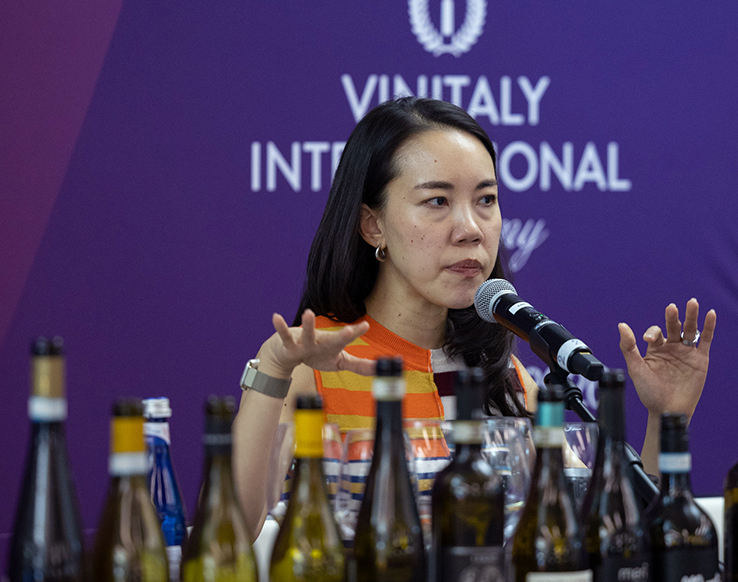
Tasting Sessions 3 and 4 led by Sarah Heller MW
Following on from Professor Attilio Scienza’s fascinating seminar about the need to move our vineyards back to more biodiverse and forested settings, Sarah Heller MW, Lead VIA Faculty, kicked off another intense tasting session of the VIA Verona Flagship 2026 students.
Opening the tasting of 28 wines, was a flight of six whites from the north to the south of Italy. Sarah explained that today’s session on whites would be all about teasing out texture in Italy’s whites, something that is a relatively new concept in the world of wine tasting; however, texture in whites is an integral and unique part of Italy’s wines.
Sarah described how texture is similar to tannin in red, in that it varies from low levels of texture to high levels of texture, depending on the grape. “It’s all about stick, slip, and lubrication,” she said, teaching students to look for texture in the middle of the tasting experience, to rub the tongue along the top of their palate, to check for phenolic compounds. “If you wait until after you spit, the subtle nuance of the texture will disappear, and everything can feel grippy.” Sarah’s descriptors for texture in white wine include slippery, waxy, oily, and chalky.
The first six wines were: Prié blanc, Garganega, Vermentino di Sardegna, Arneis, and Greco. These are what Sarah considers low texture whites, with more slip than grip.
The second flight: Albana, Ansonica, Pecorino, Trebbiano, and Biancolella were waxier in texture, with a balance of slip and grip on the palate.
The final flight started with Pigato, Vermentino di Liguria, Bolgheri Vermentino, and Vermentino di Gallura, giving students an opportunity to explore how Vermentino expresses in various territories. The last two wines were Grechetto and Inzolia. All six wines were high in texture, with an oily mouthfeel.
Moving on to Reds, Sarah explained the flights were designed to show differences in concentration. Appassimento, ripeness, acidity variation, all play a part in how concentration of fruit expresses in the wines.
The first flight: Valpolicella Classico, Valpolicella Superiore, Valpolicella Ripasso, and Valpolicella Amarone gave the students some insight into the native red grapes of western Veneto. Sarah said there has been a lot of consumer confusion regarding Valpolicella Superiore as a new category. She points out that the wines of Valpolicella always have medium to high tannins, very velvety and smooth in Amarone, where the appassimento pre-ages the tannins and helps to create a satiny finish. There is a new wave of wine making in Valpolicella looking at consumer trends, lower alcohol, and less impactful wood.
The second flight of two northern grapes, Schioppettino and Refosco were a lesson in determining color and handling higher levels of rougher tannin.
The final six wines, Lagrein, Teroldego, Barbera, Dolcetto, Ormeasco, and Lacrima, played with aromatic qualities in reds, how to identify reductive characters, how to appreciate the floral and fresh herbal qualities of these northern reds. The Lacrima showed particularly well, and Sarah declared it “a wine of harmony, not of tension.”
Enthusiastic but tired students were admonished by Stevie Kim, “don’t go out partying and trying to have the best gastronomic experience in Verona tonight. Tonight is your study night! You have to study tonight because, tomorrow night, it will be too late to cram!”
Wines tasted:
32. Blind Tasting
33. Blind Tasting
34. CAVE MONT BLANC: Vallée d’Aoste Dop Blanc de Morgex et de La Salle 2024
35. SUAVIA: Soave Doc Classico “Monte Carbonare” 2023
36. ARGIOLAS: Vermentino di Sardegna Doc “Merì” 2025
37. ANGELO NEGRO: Roero Arneis Docg “Serra Lupini” 2024
38. I FAVATI: Greco di Tufo Docg “Terrantica” 2024
39. FATTORIA ZERBINA: Romagna Albana Docg Secco “Bianco di Ceparano” 2024
40. BIBI GRAETZ: Toscana Igt Bianco “Testamatta” 2025
41. CATALDI MADONNA: Terre d’Abruzzo Igt Pecorino “Giulia” 2024
42. MASCIARELLI: Trebbiano d’Abruzzo Doc Superiore “Castello di Semivicoli” 2022
43. CASA D’AMBRA: Ischia Doc Biancolella “Tenuta Frassitelli” 2024
44. BIO VIO: Riviera Ligure di Ponente Doc Pigato “Bon in da Bon” 2024
45. CANTINA LUNAE BOSONI: Colli di Luni Doc Vermentino “Etichetta Grigia” 2025
46. GRATTAMACCO: Bolgheri Doc Vermentino 2023
47. CAPICHERA: Vermentino di Gallura Superiore Docg 2024
48. DECUGNANO DEI BARBI: Orvieto Doc Classico Superiore “Mare Antico” 2023
49. FEUDO MONTONI: Terre Siciliane Igt Inzolia “Fornelli” 2024
50. SPERI: Valpolicella Doc Classico 2024
51. TEDESCHI: Valpolicella Doc Superiore “Maternigo” 2021
52. VILLA SPINOSA: Valpolicella Ripasso Doc Classico Superiore “Jago” 2023
53. ALLEGRINI: Amarone della Valpolicella Docg Classico 2021
54. GRILLO IOLE: Friuli Colli Orientali Doc Schioppettino di Prepotto 2021
55. LIVIO FELLUGA: Friuli Colli Orientali Doc Refosco dal Peduncolo Rosso 2021
56. ABBAZIA DI NOVACELLA: Alto Adige Doc Lagrein 2024
57. FONDAZIONE MACH: Teroldego Rotaliano Doc 2024
58. BRAIDA: Barbera d’Asti Docg “Montebruna” 2022
59. G.D. VAJRA: Dolcetto d’Alba Doc 2024
60. TENUTA MAFFONE: Ormeasco di Pornassio Doc 2024
61. VELENOSI: Lacrima di Morro d’Alba Doc “Villa Angela” 2023