VIA Verona 2026 Tasting Sessions 1 and 2 led by Sarah Heller MW
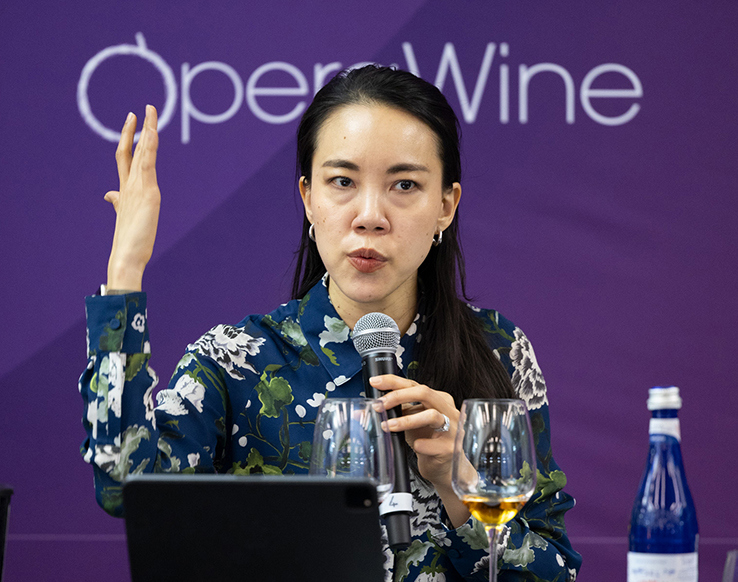
Tasting Sessions 1 and 2 led by Sarah Heller MW
Sarah Heller MW opened the first Faculty Tasting Session with a blind tasting of two wines. Giving the students only a brief period to evaluate the wines, Sarah said, "This is a moment to check where you are. Don’t overthink it, make your notes without using the VIA Tasting Grid, and we will create a word cloud of what you think these wines could be". Wise words for students feeling apprehensive about the blind tasting component of the VIA exam! Sarah then analysed the wines and reminded the students about components of the grid which they will need to address during the exam... "Don’t forget to say DRY or SWEET in the structure section!" is another great piece of advice, which people often forget in the panic of an exam.
Breaking down the tasting training VIA seeks to achieve for its students, Sarah asked the students to focus on the level of tannin in reds and texture of white, as well as the importance of adding a descriptor for tannin and texture as well. "High tannin with a pebbled leather quality", is a great example of Sarah’s commitment to teaching VIA students how to distinguish the details in the structure of these wines, enabling them to develop a more profound understanding of the wines and better communication skills as VIA Ambassadors. Sarah joked, "I spend a lot of time thinking about cherries! Remember to describe and distinguish between ripe and unripe, bitter or sweet, black or red, and go as far as you are able to go in the cherry world. I also spend a lot of time with my spice rack, so pay attention to the wealth of descriptors available there". Sarah advised, "The VIA grid should be your best friend this week, it should be tattooed on your soul, use every opportunity to be descriptive and precise".
The tasting session began with neutral white wines from Gavi in Piemonte, Etna Bianco from Sicily, and Pinot Bianco from Alto Adige. Sarah reminded everyone that, although Etna is in Sicily, it is not a Mediterranean wine, it is a volcanic soil, high altitude, mountain wine. "White wine color will drive you insane. The light in the room will make them all look different. Don’t waste your life writing about it, as long as you are in the right lane, not convincing gold and amber for pale lemon, you will be fine". The next two wines were Terlan from Alto Adige and Vernaccia di San Gimignano from Tuscany.
Tension versus harmony is an important element to Sarah’s descriptions of wines. She says that French wines tend toward harmony and balance, where Italian wines lean into tension, with texture, acidity, and flavors all pulling in different directions. The next three wines tasted all had 13% abv and all 2024, but their characters were completely different, showing the importance of location. Verdicchio dei Castelli di Jesi, Verdicchio di Matelica, both from Marche, and Lugana DOC from Lombardy, made with Turbiana grapes, a grape of long disputed origin and now genetically proven to be distinct from Verdicchio.
The next set of wines, with a Soave Classico, a Friulano, and a Friuli Isonzo Pinot Grigio in a ramato style, is again a neutral set of whites from the north, with the exception of a Fiano from Campania, which is from Irpinia, at altitude, and expresses as a northern. Phenolics on the palate and a richness of flavor were evident in all three. All have benefitted from skin contact. Sarah tasked the students with how to describe and distinguish these wines in the notes, how to identify them on the palate. The key to this set of wines is truly the texture and the structure, as well as the winemaking, which includes lees work.
Moving on from the last two whites, a Nascetta and a Gewurztraminer, the students arrived at the red part of the session, kicking it off in fine fashion with four Barolos. Sarah wants students to look at the difference between single MGA wines and blended site wines. Soils will be very important here and learning to feel them and distinguish them is key. Overall, Sarah wants the students to think about what characterises Nebbiolo. What do these wines all have in common and what is Nebbiolo in the Langhe like? Sarah laughingly says her heart is in Barolo and she will turn a blind eye to anyone who accidentally swallows during this part of the tasting. She also points out that Piemonte producers have discovered how to turn Burgundy lovers into Barolo lovers over time and with care. Sarah made reference to the variation in slope location and exposure to sun as primary actors in the wine styles.
The next section of reds was a texture ladder, going from low and less textural, to high levels with much more texture. Sarah employs a creative method of describing tannin texture, using various fabrics, sizes of grains, and other materials like ash and talc to expand the students’ ability to distinguish and describe this important element of so many wines. The wines ranged from Schiava, Frappato, Valtellina Superiore, Etna DOC Rosso, Barbaresco, all the way to Pignolo.
A final flight was made up of 5 pale reds, although not all of the wines wanted to play the game Sarah intended. From Ciliegiolo 2025, to Grignolino 2020, to Freisa 2019, to Cornalin 2023, to Ruchè 2023, the wines were all darker in color than desired, due to some aging and winemaking techniques. The key factor is tight, clenched tannins and high acidity across the board, with an added element of florals in the Ruchè.
A very long day for the candidates, having been hard at work from 8:30 to 5:30 with very few breaks. Sarah reassured the students that they will continue to gain confidence over the next 4 Faculty guided sessions coming tomorrow and Saturday. Happily, the next item on the program was an exciting departure by coach from Veronafiere, on their way to a fabulous evening at Berlucchi in Franciacorta, hosted by the wonderful Cristina Ziliani. Berlucchi has been one of the Educational Supporter of the VIA Program for the past several years, hosting a gala evening at their beautiful and historic Palazzo Lana in Franciacorta, and awarding the annual Franco Ziliani Prize for Best Student. VIA is extremely grateful for Berlucchi’s continued collaboration, generosity, and gorgeous hospitality
Wines tasted:
1. Blind Tasting
2. Blind Tasting
3. LA MESMA: Gavi Docg Tranquillo del Comune di Gavi Monterotondo "Etichetta Nera" 2023
4. I CUSTODI DELLE VIGNE DELL'ETNA: Etna Doc Bianco "Ante" 2022
5. ST. MICHAEL EPPAN: Alto Adige Doc Pinot Bianco "Sanct Valentin" 2023
6. KELLEREI TERLAN: Alto Adige Doc Terlaner Cuvée 2025
7. TERUZZI: Vernaccia di San Gimignano Docg Riserva "Sant'Elena" 2022
8. SARTARELLI: Verdicchio dei Castelli di Jesi Doc Classico 2024
9. BISCI: Verdicchio di Matelica Doc 2024
10. ZENATO: Lugana Doc "San Benedetto" 2025
11. DI MEO: Fiano di Avellino Docg 2024
12. INAMA: Soave Doc Classico "I Palchi" 2022
13. VIE DI ROMANS: Friuli Isonzo Doc Pinot Grigio "Dessimis" 2022
14. MARCO FELLUGA - RUSSIZ SUPERIORE: Collio Doc Friulano 2024
15. ELVIO COGNO: Langhe Doc Nascetta del Comune di Novello "Anas-Cëtta" 2022
16. CANTINA TRAMIN: Alto Adige Doc Gewürztraminer "Selida" 2024
17. G.B. BURLOTTO: Barolo Docg 2021
18. LUCIANO SANDRONE: Barolo Docg "Le Vigne" 2020
19. JOSETTA SAFFIRIO: Barolo Docg "Perno" 2020
20. ETTORE GERMANO: Barolo Docg "Cerretta" 2019
21. GIRLAN: Alto Adige Doc Schiava "Gschleier" Alte Reben Vernatsch 2023
22. VALLE DELL’ACATE: Vittoria Doc Frappato "Il Frappato" 2024
23. AR.PE.PE.: Valtellina Superiore Docg Grumello Riserva "Buon Consiglio" 2018
24. PIETRADOLCE: Etna Doc Rosso "Archineri" 2021
25. PRODUTTORI DEL BARBARESCO: Barbaresco Docg 2022
26. LA VIARTE: Friuli Colli Orientali Doc Pignolo Riserva 2015
27. PETRA: Costa Toscana Igt Ciliegiolo 2025
28. ACCORNERO: Grignolino del Monferrato Casalese Doc Riserva "Bricco del Bosco Vigne Vecchie" 2020
29. BALBIANO: Freisa di Chieri Doc "Vigna Villa della Regina" 2019
30. GROSJEAN: Vallée d’Aoste Doc Cornalin "Vigne Rovettaz" 2023
31. MONTALBERA: Ruchè di Castagnole Monferrato Docg Riserva "Il Fondatore" 2023