VIA Verona 2026 Supporter Masterclass: Consorzio Tutela Vini Montefalco
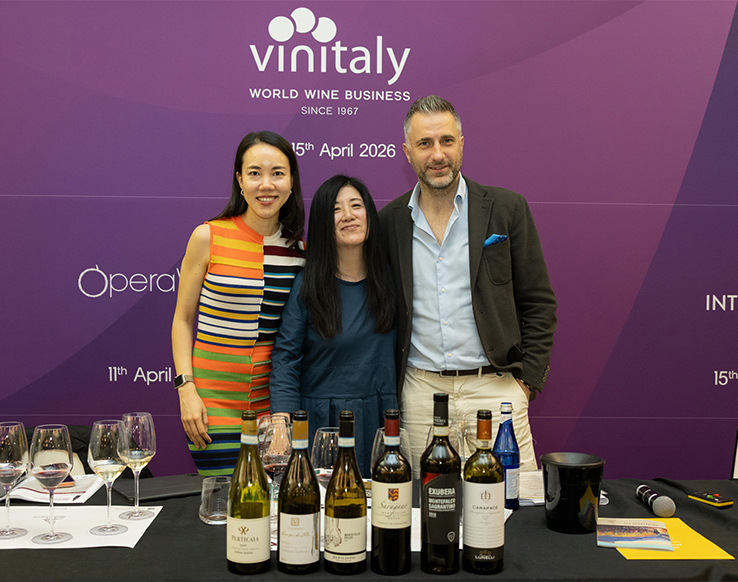
Different native grapes, one authentic territory: Montefalco
Paolo Bartoloni, President of the Consorzio presented the session.
Paolo gave our students the history of the town of Montefalco and the Sagrantino grapes from the area. He explained the name of the town came from a visit of Emperor Federico II, who came to Montefalco in 1322 and he flew his falcons for hunting. He discovered a lot of local falcons had a disease and died. The King wanted to help, so he tried to find a recipe to save the birds. He came up with a "secret potion" using the skins of Sagrantino grapes to save the falcons. There are some discrepancies about the origin of the name of the Sagrantino grape. One theory has it that the religious orders who came to Umbria in the 13th century and used the local grapes for the sacraments, gave rise to the name Sagrantino. Paolo mentioned the second school of thought, using the "tino" suffix indicating a small grape.
The Consorzio currently has 75 producers on 1000 hectares. Only 50 of those hectares are given to the production of white Trebbiano Spoletino. The region produces 1.2 million bottles of Sagrantino, 2.7 millions of Rosso di Montefalco, and 300,000 of Trebbiano Spoletino.
Sagrantino is one of the most powerful wines in the world, with a very long aging potential. Paolo says, "We are proud of our big tannins! We are trying to use new and different techniques to smooth the tannins a bit for modern customers, but we will never make low and no alcohol wine. For me that is water! Our average alcohol level is 15% abv and it’s hard to change that, especially in today’s climate". He adds that Trebbiano Spoletino is now gaining popularity and respect, and he believes it is the future of the DOC.
The Consorzio was born in 1979 and obtained its DOC in 1981, and DOCG for Sagrantino in 1992. In 2011, the Trebbiano Spoletino achieved DOC status, and now the Consorzio will increase the planting area for the white grapes.
Paolo invited all the students to "Montefalco En Primeur" taking place next week, laughing that they should come if they are alive after Vinitaly and the VIA exam. He told us there are approximately 800,000 people in Umbria. "We are friendly, we are happy because we live very well, in the hills and forests. I never find Umbrians when I’m travelling because they never leave home", Paolo joked. The region is heavily investing in tourism and especially wine tourism.
Umbria is a landlocked region, with hot summers but very cool nights due to the hills. "We fight climate change with our soil, which is primarily clay and retains water", Paolo explained. There is never a lot of water stress in the area, even in a hot vintage.
Sarah says Trebbiano Spoletino has such high-quality potential and the ability to make so many styles because of its elevated acidity and late ripening. It can resemble Sauvignon Blanc if it’s made in a reductive style. The whites of Trebbiano Spoletino are designed to cut through the rich, meaty, heavy food in Umbria. The town of Spoleto is slightly further south than Montefalco.
Paolo says Montefalco Rosso is the "cash cow" of the region and we should all be grateful for the level of acidity to deal with the extremely drying tannins. He says a long maceration on skin can contribute to a fruitier character. He also says that all Sagrantino producers know they must lighten their styles. There is a lot of maturing in stainless steel now, both before and after any passage in oak.
Montefalco Bianco must have min 50% Trebbiano Spoletino (this might be eliminated from the denomination, leaving just the Trebbiano Spoletino DOC as the white wine for the region).
Grechetto must have min 85% Grechetto
Rosso must have 60-80% Sangiovese, 10-25% Sagrantino
Perticaia Spoleto DOC Trebbiano Spoletino 2024. Chalky, rich, mature yellow stone fruit, flint, struck match.
Valdangius Spoleto DOC Trebbiano Spoletino "Campo de Pico" 2024, macerated, batonnage, emphasizing texture. Smells like cooked corn, white truffle, a style meant to go with the local food. Very chalky and textural.
Di Filippo Montefalco DOC Rosso 2023. Ripe red plums, lots of sticky tannin, very fine, woolly, not able to separate grains. Organic producer. Licorice, clove 60% Sangiovese, 25% Barbera, 15% Sagrantino. Paolo says the Rosso is very much in demand in recent years, especially in northern Europe.
Tenuta di Saragano Montefalco DOC Rosso 2021. Very medicinal, concentrated, extracted, very aggressive tannins with a grainy edge. Savory and meaty. 70% Sangiovese, 15% Sagrantino, 15% Montepulciano.
Tenuta de la Custodia, Montefalco Sagrantino DOCG "Exubera" 2018. Very tannic but the fruit is fresher on the nose, more modern and appealing. Very dark black and purple fruit, mulberry and juniper. Short in the finish, high level of chewy stalky tannins with a pebbly grain, raspy, raw brocade type of cloth.
Tenute Lunelli Montefalco Sagrantino DOCG "Carapace" 2021. Deep red ripe plum compote, intensely fruity and medicinal on the nose, mirto, licorice syrup, spicy, anise, clove, very amaro style, like an after-dinner drink. The tannins are more cohesive, leathery, sticky, intense.
Wines tasted:
1. PERTICAIA: Spoleto Doc Trebbiano Spoletino 2024
2. VALDANGIUS: Spoleto Doc Trebbiano Spoletino “Campo de Pico” 2024
3. DI FILIPPO: Montefalco Doc Rosso 2023
4. TENUTA DI SARAGANO: Montefalco Doc Rosso 2021
5. TERRE DE LA CUSTODIA: Montefalco Sagrantino Docg “Exubera” 2018
6. TENUTE LUNELLI: Montefalco Sagrantino Docg “Carapace” 2021