VIA Verona 2026 Supporter Masterclass: Consorzio per la tutela del Vino Bardolino Doc
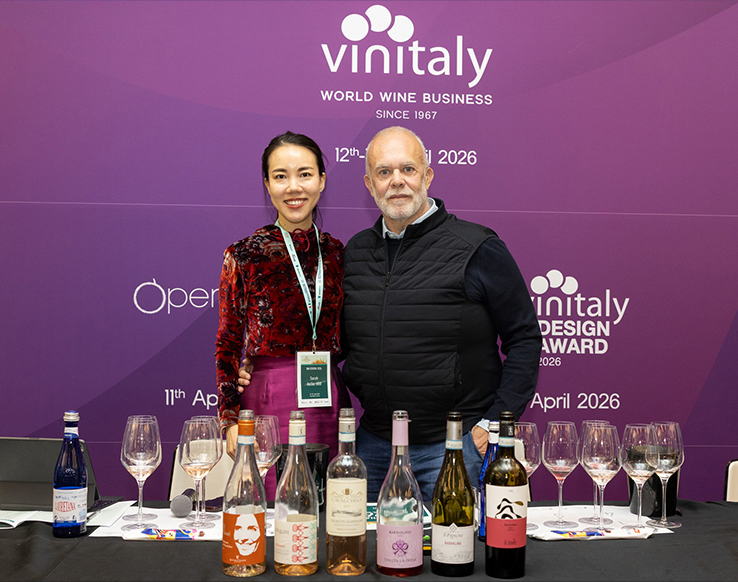
Bardolino Wines: Two Expressions of One Territory
Vinitaly International Academy Verona 2026 Flagship Edition officially kicked off this morning, amidst the beautiful chaos of the final day of the Vinitaly wine fair. VIA has a life of its own, having brought together an international community of wine professionals over the past 11 years, and sometimes we forget how lucky we are to have our home in Verona. VIA Flagship always takes place around the same time as the fair, and the city is buzzing with wine people, wine enthusiasm, and wine excitement. There is absolutely no better place and no better time to take a deep dive into Italian wine education.
VIA has certified 464 ambassadors across 52 countries since it began in 2015. This morning sees 59 students from 28 countries gathering at the PalaExpo of Veronafiere to start an intensive week of study, tasting, and learning. Four more candidates will join them on Sunday to sit the challenging VIA exam. Sarah Heller MW is the lead Educator for VIA and she will guide the technical tasting of 96 wines over the next 4 days. VIA is also proud to have 11 Supporter Masterclasses this year, with Consorzios from all over Italy presenting their territory and their wines. In total, students will taste 164 wines from all twenty regions of Italy.
The first VIA Supporter Masterclass was sponsored by the Consorzio per la Tutela del Vino Bardolino DOC. Costantino Gabardi explained that Bardolino is a small town on the eastern shore of Lake Garda, focused on native grapes Corvina and Corvinone. He described Corvina as a "gentle" grape that gives the wine less tannin, soft acidity, and pale color. Why should we use this variety to make a wine, when tannins, color, and acidity are so valued in wine? Because the wines made with Corvina in Bardolino are particularly balanced, with an impressive equilibrium on the palate. The special characteristic here is "juiciness", which Costantino says is unparalleled in other wines from other regions. The key elements in the vineyards are the northern European Mediterranean climate, on the 45th parallel latitude line, morainic hills, slopes of 5-9%, four distinct seasons, the morning wind (from north to south) and the afternoon wind (from south to north) to keep the grapes dry, good sunlight for most of the year, enhanced by the reflection of light from the lake, with nearby Monte Baldo acting as a natural cooling system. Light, crispy, juicy, fruity notes are prevalent in both the reds and the rosés. Keeping the bright acidity and quality of the skins sometimes means harvesting early, as Corvina can be fragile if there is too much rain at the end of the ripening period. Rosé wines here are called Chiaretto di Bardolino and the region is now one of the most important denominations in Europe where grapes are intentionally dedicated to the production of rosé. Bardolino was the first appellation for rosé in Italy, and a modern uniformity of style in the color was obtained in 2024. The color is described as a very pale rosé.
The tasting began with 3 Chiaretto rosés, all showing a lovely pale rose gold copper hue, floral nose of pink rose petals, fresh strawberries, raspberries, crunchy red currants, unripe peach and unripe apricot. On the palate, the wines were fresh, light bodied, slightly saline on the finish, with a mouth watering, fruity character.
Giovanna Tantini "Il Rosé" Chiaretto di Bardolino DOC 2025 was the first wine. It showed a hint of fresh herbal green, apricot kernel, along with the red berries.
Le Fraghe "Ròdon" Chiaretto di Bardolino DOC 2025 was sweeter on the nose, confected, with candied notes of white peach, dry on the palate and high acidity.
Cavalchina Chiaretto di Bardolino DOC 2025 has a more mineral touch with a hint of graphite, notes of unripe white fruit, flowers, a touch of toast from contact with lees, and nice sweet/sour sensation on the finish with a tiny indication of tannin.
Costantino pointed out that thiols (volatile sulphur compounds in fermentation, especially in reductive circumstances with no oxygen) create strong aromatics similar to those in Sauvignon Blanc. That is not happening with these wines. The volume on the palate is coming from lees contact and lees stirring. He commented that these wines need a lot of attention. With full bodied wines, we know that we should stop and analyze carefully. Lighter wines like Bardolinos are easier to drink and we don’t stop long enough to evaluate them. He told the students to look for the citric acidity, which is drier, as opposed to malic acid which is bitter, and tartaric acid which is salty. There is no tannin in these wines to speak of, but there is a grip on the palate that is very pleasant. Perfect pairing with fusion cooking, Asian food, and Japanese cooking. These wines are considered harder to pair with traditional Italian food, so they often become aperitivo wine. In fact, the wines go very well with white fish, fried food, local Garda trout, white meats. No residual sugar, but there is volume on the palate, due to the high acidity and the work with lees. The wines are very well balanced with sweet fruit, drying citric acid, very drinkable and pairable with many simple dishes.
Sarah Heller MW pointed out that Chiaretto is a very commercially successful rosé style and this is the first time we've had a rosato in a VIA Supporter tasting. Key points are the early harvest, and production of "one night wine" techniques where the skin contact is limited to max 10 hours at max 7-10 °C. Rosé wines are divided by orange hue or pink hue, determined by the fermentation process of perfectly healthy grapes. Pink color is achieved with warmer fermentation, orange color is achieved with lower temperature. Corvina has a lot of malic acid, there is no malolactic conversion because we intentionally preserve this character.
Costantino explained that Sommacampagna, La Rocca, Monte Baldo are the 3 sub-divisions of Bardolino, each with very distinct characters in their wines. Sommacampagna is cold in winter, hot in summer. La Rocca is Mediterranean in climate, very near Lake Garda. Monte Baldo is a mountain style with higher altitude.
Red Bardolinos are made with rapid skin contact and carbonic maceration. Costantino makes the point that we must not forget Bardolino is red. Chiaretto di Bardolino is rosé. Classico is the central part of the historic appellation. Superiore is a defined and registered vineyard, and the wines from Superiore vineyards have 12 months longer aging in bottle and 1% more alcohol by volume.
The tasting of our Bardolino trio showed all sheer ruby reds. This wine style is a link between a classic red and a classic rosé style. Bardolinos are chillable reds, perfect for summertime, lakeside activities, picnics, outdoor grilling, and easy food. Costantino says the reds have lower acidity than the Chiarettos, to which Sarah Heller MW had an objection (since we know Corvina is a high acid grape). The unique opportunity for interaction between VIA Faculty and VIA students with VIA Supporters from each unique denomination and Consortium always creates lively discussion and is an essential component of learning and sharing perspectives. Costantino went on to describe the Bardolino red wines as having body and perfume dressed like a red wine, but speaking like a rosé wine.
Il Pignetto Bardolino DOC 2024 has 50% carbonic maceration (Beaujolais Nouveau style, made with Gamay). Fruity, strawberry, black raspberry, candied, a little touch of tannin.
Tenuta La Presa Bardolino DOC 2025 is extremely flowery, violets and a whisper of fresh green pepper, sweet spices of clove and cinnamon, graphite, blood orange zest, with a pleasant, vaguely bitter finish.
Le Tende Bardolino DOC Classico 2025 is a stronger expression of blood orange and dried violets, with red geranium, pin carnations, red currant, a note of dried herb. Very vinous – red grapey, juicy.
Sarah Heller MW asked students to focus on bitterness and the important part it plays in balance, especially in Italian wine. Tonic bitterness is easy to understand because people know tonic water. Costantino says bitterness sustains the fruity sweetness of the wine. He also warned that these wines should never be opened early because they lose their freshness immediately and pick up oxidised notes.
None of these wines has a stark, strong, heavy sensation. All are light and silky. These are the key notes of Bardolino wines. Sarah explains the style of these wines is in keeping with the trend of chillable reds and Costantino agrees Bardolino has benefitted from the trend but is still a region to be discovered. This easy style is often dismissed as not a quality wine; however, these are very technical wines, difficult to produce at quality level. There is deep historic research and data collection in Bardolino, one of the longest in all of Italy.
Sarah asked how to distinguish Bardolino from Valpolicella and Costantino replied Bardolino can make Valpolicella wines, but Valpolicella cannot make Bardolino wines because the climate is not as fresh farther inland from Lake Garda. In Valpolicella, some of the grapes are dried to make the wines more complex, Costantino says, but in Bardolino, the wind does the work. There are a lot of young producers in Bardolino and Valpolicella, there is a lot of innovation and organic certification going on in both regions. In Bardolino, they are searching to keep the alcohol level low, and 12-12.5% is considered perfect.
Sarah asked Costantino to discuss the other local native grapes of the region. His reply was amusing, if a little divisive. He said, "Oseleta is like a panda bear, going extinct. Molinara is like washing the car with sand paper, and producers can't seem to find a way to work with this variety, so there is danger of losing the grape. Rondinella is ok but we have Corvina and Corvinone to do the job. The history of these two grapes begins on the shores of Lake Garda and that is where it does its best in a fresh state. In Valpolicella, it has much more to do with the winemaking techniques".
Wines tasted:
1. GIOVANNA TANTINI: Chiaretto di Bardolino Doc "Il Rosé" 2025
2. LE FRAGHE: Chiaretto di Bardolino Dop "Ròdon" 2025
3. CAVALCHINA: Chiaretto di Bardolino Doc 2025
4. IL PIGNETTO: Bardolino Doc 2024
5. TENUTA LA PRESA: Bardolino Doc 2025
6. LE TENDE: Bardolino Doc Classico 2025