VIA Verona 2026 Supporter Masterclass: Consorzio per la Tutela del Franciacorta
Discover Franciacorta: Territory, Typologies and Identity
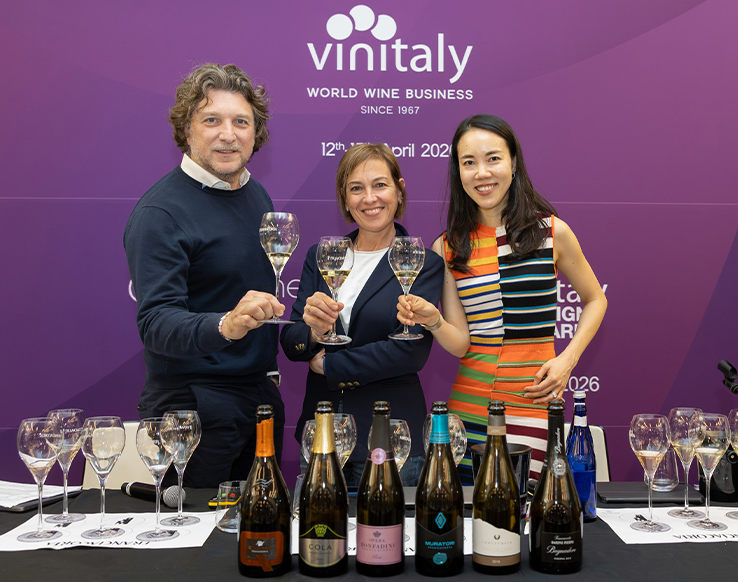
Giammario Villa, USA Franciacorta Brand Ambassador, presented the session, along with Vice President Laura Gatti.
The theme of the presentation focused on six distinct wines showcasing the region's unique nuances, terroir influence, and winemaking excellence Giammario emphasized that the social element should be the focus of any drinking experience.
Franciacorta has become an increasingly recognised global brand, a luxury sparkling wine that is also perfect for everyday consumption. Franciacorta has expanded its sponsorship for many high-profile events, including the Emmys, held in Los Angeles at the Ritz Carlton hotel.
Franciacorta is a very small wine area, located in Lombardy in the north of Italy, close to Rhaetian Alps, the glacial Lake Iseo, and the Oglio River. This is not a Mediterranean territory, it is not near the sea, the climate is more continental. The region covers 200 kilometres, and contains 19 municipalities, 3,439 hectares of vineyards, 66% of which are organic. The region produces 18.9 million bottles per year, as of 2025, from 119 wineries.
Still considered a young appellation, having achieved their DOC in 1967, after the first release of Franciacorta in 1961, Franciacorta has a lot of history, particularly as they were the first region to release a classic method sparkling wine in Italy. The wines now have DOCG certification; however, they chose to remove it from the label, relying solely on the name and fame of the Franciacorta brand.
Being close to Milan, with its socio-economic wealth, dynamic systems, business mentality, and reputation for innovation and an open mindset, makes this location perfect for Franciacorta wines. The synergy with Milan's fashion, lifestyle, food, and sport has proved hugely beneficial.
The coexistence of the wine, the region, and the reputation for style is key to Franciacorta's wines. Italians now appreciate the quality of Franciacorta to such an extent that less than 15% is exported, with the top foreign markets being Switzerland, USA, and Japan.
The philosophy of the Consorzio is about being Franciacorta, not competing with someone else (Cava, Champagne, etc). The marketing focuses on a celebration wine, a social experience, seductive wines, and being food friendly. The Saten style was introduced in 1992 – highlighting the juiciness of the fruit, and a creamy, softer palate. Saten now makes up 12.3%of Franciacorta production. In 1995 enology zoning took place and the focus became less bar of pressure, longer aging 24 months, and a silky mouthfeel. No Erbamat is allowed in Saten, and it is only created in a brut style.
Giammario puts forward the Consorzio’s idea of 3 steps to quality viticulture:
- A) Human influence – long history, in the year 1000 Cistercian monks arrived and a “Francae Curtes” area was created where there were no taxes.
1277 in Brescia annals
1564 Agostino Gallo mentions Albamatta grape
1570 Conforti mentions “mordacious wines “biting, stinging in Franzacurta
1809 Napoleonic registry record of fizzy wines
1961 1st Pinot di Franciacorta
1967 DOC established
1990 Consorzio founded
2002 first organic
2025 35th anniversary, new zoning and climate change studies
- B) Geology – alpine morainic soils minerals (iron)
- C) Climate and geography – lake and latitude and Monte Orfano, Monte Alto, hotter summer now, 500-600mm rain annually, winds come down the Camonica valley, moderated by Lake Iseo
Lots of sunshine, very humid.
Franciacorta is monitoring the biodiversity reserve, meteorology network, phenological and ripening, plus:
Ethical labor, workers’ rights
CO2 Soil absorption to reduce CO2 in atmosphere
Gas Emissions, carbon footprint
The amphitheatre shape region at foot of Iseo, contains morenic soil, alluvial soil, clay and limestone soils on higher altitude location, fine grain soils on lower sites, well drained, pebbles, rocks, in total a very fertile region, where work has to be done to contain the yields.
GRAPES:
Chardonnay 787%
Pinot Nero 18.7%
Pinot Bianco 3% (max allowed 50%)
Erbamat 0.3 % coming back from extinction, good in climate change, later ripened, indigenous (max allowed 10)
Min 18 months from tirage on lees
Training guyot, cordon spur
4500 vines per hectare
Yields 1.5-2 kg per vine
Perlage very important, comes from choices at tirage, just like sweetness style decided at that moment.
Rosé is only 10% of production, with 24 months on lees, made at all levels of sweetness:
Min 35% PN
Chardonnay max 65%
Pinot Bianco max 50%
Erbamat max 10%
Giammario and Sarah agree that all the wines have a flake of mineral salt.
Quadra Franciacorta DOCG Brut "QBlack" NV. Monte Orfano, 80% chard, Pinot Bianco, Pinot Nero. 24 months on lees, autolytic character more present than the fruit, cracker, rising bread dough, sambuca flower.
Cola Battista Franciacorta DOCG Brut Satèn Millesimato 2021. 30 months on lees 100% chard, Monte Alto (NW) 30% oak aging, acacia, toasty pastry, softer on palate due to rounder softer bubbles, luxurious mouthfeel, lemon peel.
Bonfadini Franciacorta DOCG Brut Rosé "Opera" NV. 50/50 Pinot Nero and Chardonnay, Monte Alto, tiny bubbles, persistent, pale antique rose gold, torrone note, toasted hazelnut, wild strawberry, cognac, pink grapefruit zest, fresh apricot purée, 50% oak aging of base wine in barrique, chalky texture and grip.
Muratori Franciacorta DOCG Brut Millesimato "Mille" 2020, near the lake, warmer, riper fruit, 100% chard, no oak, white grapefruit, lemon blossom, white hawthorn blossom, Meyer lemon juice, green almond finish.
Laura says the 2020 and 2021 vintages were perfect, no extreme weather, great harvest, perfect amount of rain and sun. Long aging potential for these wines.
Corte Fusia Franciacorta DOCG Dosaggio Zero Millesimato 2019. Small producer, low intervention. 70% Chard, 30% PN. Completely on clay and limestone soil, wisteria flowers, hazelnut, camomille, fresh straw, broom flower, acacia, golden apple, golden kiwi, flaky pastry and sharp orange compote.
Barone Pizzini Franciacorta DOCG Riserva Dosaggio Zero "Bagnadore" 2016. Near Monte Alto on colluvial deposits. 72 months on lees. Distinctly golden, crusty hot wheat bread, cognac, 60% PN, 40% Chard, 8 months in barrique, pungent, powerful, intense on the finish.
Sarah says there has been a lot less use of oak in recent years. The identity of the DOCG is really clarifying. The different types are finding their own paths, especially Satèn. The focus on winemaking and location within the region helps consumers to understand better. Giammario says blending parcels are very important, so using the map is key to understanding the soils and the climate and the wines that end up in the glass.
Wines tasted:
1. QUADRA: Franciacorta Docg Brut “QBlack” N.V.
2. COLA BATTISTA: Franciacorta Docg Brut Satèn Millesimato 2021
3. BONFADINI: Franciacorta Docg Brut Rosé “Opera” N.V.
4. MURATORI: Franciacorta Docg Brut Millesimato “Millé” 2020
5. CORTE FUSIA: Franciacorta Docg Dosaggio Zero Millesimato 2019
6. BARONE PIZZINI: Franciacorta Docg Riserva Dosaggio Zero “Bagnadore” 2016