VIA Verona 2026 Advanced Seminar with Professor Attilio Scienza: The forest and the vineyard, a new alliance
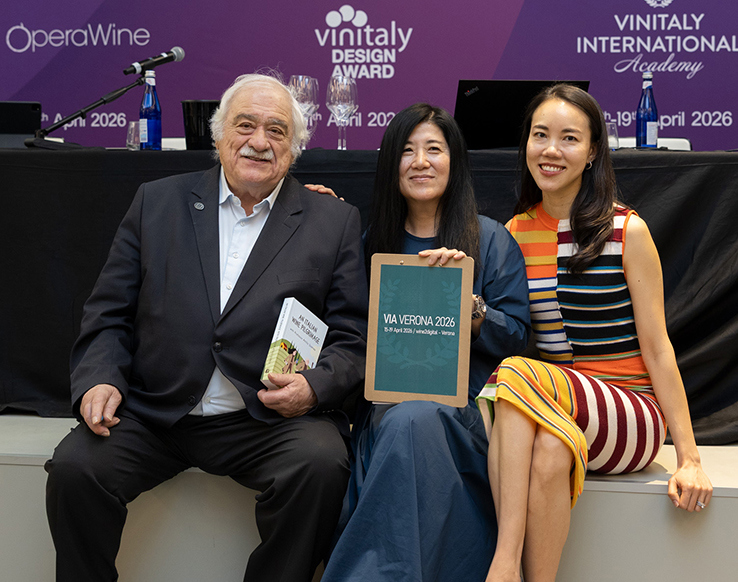
Professore Attilio Scienza: The forest and the vineyard, a new alliance
Professore Scienza opened the session this morning by expanding on yesterday’s concept of essence and how that unique distinguishing characteristic is so crucial. Today he takes the concept away from autochthonous and moves it towards the question of "naturality".
He explains that the landscape is composed of the soil community, the plants, the vineyard, and the epigean community (things that crawl, creep, or grow).
When we taste wine, it conveys to us a myriad of elements: color, perfume, taste, aroma, evocation, memories, naturalness – all things that can be said to come from the landscape of the vineyard. Consumers today increasingly demand a “natural” wine, but this is a term that is very undefined and certainly uncertified.
To respect the environment, do we have to be:
Organic? Biodynamic? Natural? Ancestral? Artisanal? Slowfood? Or is this just green washing?
Only the fruits of the forest are truly "natural" products that grow in uncultivated places. When people arrive in a "natural" place they immediately transform it with their domestic practices. "Natural" would be better called: alive, raw, pure, real, true, low intervention, authentic, farm produced – we are talking about wines produced in places where the vine is in balance with the environment.
Scienza told us that viticultural vocation is the particular suitability of a place for the production of a wine with specific characteristics.
Essence is the element that defines an individual or a place as such and that makes it different from everything else.
"Cult" wines are born when a wine becomes inseparable from the place where it is born. The place becomes part of the content. Vines must be planted where they will express best, where the vocation of the land suits the vine. Finding the correct place will help to eliminate the need for intervention.
A new type of marketing is needed to support this new way of looking at unique wines from unique points of origin. We must consider the competitive advantage of goods produced in places with recognised brand identity. Currently, there are very few places in Italy with significantly established brand identity, incorporating tourism, culture, heritage, investment, exports, and the right people running it.
The concept of vocation is an expansion on the idea of terroir, which focuses on the climatic environment, the grape variety, and the winemaker, and their overall interactions. Vocation considers the environment surrounding the vineyard as well, looking at the relationship with the vine and the signals produced by the plants to protect against fungi and insects.
People removed the vineyard from its natural protective surroundings and we need to go back to that system in order to reduce intervention. Taking away the natural support system made viticulture easier for humans but made success and health and survival harder for the vines
The phylloxera epidemic, at the turn of the 20th century, fundamentally changed the viticultural system. It became a mono-culture and more chemical treatments were introduced, creating a chemical dependence in the plants, rather than supporting their natural resistance.
High quality wines demand vibrantly alive soils and a biodiverse environment. The vine and the forest share an evolutionary path, beginning 50 million years ago in forests of Northern Europe (Sweden and Denmark) where wild vines retreated to forested places for protection and support during ice ages.
A plant can lower the temp of its surroundings by 2°C, as seen in parks located in hot urban locations. In a vineyard surrounded by forest, the thermal mitigation can be up to 3-4°C and the diffusion of volatile organic compounds in the soils is much more thorough.
There are many ways to return to a more biodiverse way of managing viticulture. We can look at the relationship between Asprinio and Poplar trees in Caserta, Campania, and many Tuscan vineyards that are located near forests or are surrounded by woodland. We can add hedgerows for biodiversity or create corridors of biodiversity in the vineyard itself, as well as plant rows of trees in vineyards to block wind and accentuate shading.
Inter-plant signals: BVOCs or VOGs (Biogenic Volatile Organic Compounds)
Plants produce a broad spectrum of BVOCs above and below ground to communicate with other plants, helping to protect from imminent threats.
In vineyards close to woods, cultivated varieties express up to 50 genes involved in tolerance to environmental stress like drought and heat and parasites, these genes reduce the need for treatments and allow the resulting wine to be more expressive.Only a few kilometers from the forest, the same cultivated varieties express only 15 genes.
Scienza explained the concept of Epigenetics: the DNA that learns.
RNA interference is a natural mechanism by which RNA fragments turn off the expression of a particular targeted gene. This is not about "saving" plants – this is about strengthening, creating strategic coexistence, the goal is to achieve a climax of balance in the vineyard. This will require an investment of time and training, acceptance of new technologies, and more research.
Professor Scienza's manifesto for a new viticulture and precision eco-friendly strategies:
- Zonation on the principles of eco-compatability and sustainability
- Maintenance and implementation of biological balance
- Increase endurance of plants
- Precision and environmentally friendly farming
In short, returning to a place where human, animal and plant activity are part of a single, inter-connected system.