Italian Wine between Tradition and Financial Innovation: Interview with Massimiliano Cattozzi of Intesa Sanpaolo
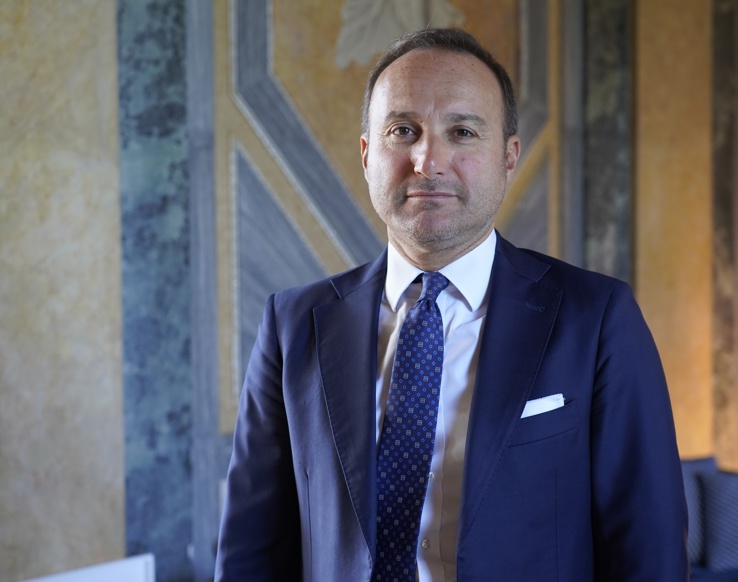
Massimiliano Cattozzi is Head of the Agribusiness Department at Intesa Sanpaolo, the national specialised network within the Banca dei Territori Division, led by Stefano Barrese. This structure operates throughout Italy with 1,100 professionals, 250 operating branches and more than 80,000 clients served along the entire agri-food supply chain, with particular attention to the wine sector.
Director Cattozzi, how mature is the wine sector today in its relationship with finance and credit?
The Italian wine industry expresses extraordinary entrepreneurial ability, but this does not always come with full awareness of financial logic. In smaller businesses, a traditional approach to economic and financial management sometimes persists, whereas today it is increasingly essential to engage with banks on topics such as profitability, cash flows, business model sustainability and the management of production cycles.
The Agribusiness Department supports companies in the sector along this path primarily through credit, and above all by helping entrepreneurs analyse their business with more advanced tools, by structuring investment planning, and by evaluating extraordinary finance operations such as M&A, scaling and generational expansion thanks to the cross-functional expertise of a full-service operator like Intesa Sanpaolo.
Is it more complex to engage with smaller wine producers?
Small wineries are often family businesses, deeply rooted in their territories and linked to tradition. This is not a limitation, but it requires a targeted approach, which Intesa Sanpaolo has strengthened over time, supporting numerous companies in achieving organic growth, including abroad.
Thanks to the widespread presence of the Banca dei Territori and the specialisation of the Agribusiness Department, we can build a direct and ongoing dialogue based on a deep understanding of each company’s production, commercial and asset dynamics.
The added value lies precisely in our ability to offer tailor-made solutions, starting from the specific identity of each territory and denomination.
Does the sector need more financing today, or more advisory support?
Topics such as sustainability, digitalisation and risk management require increasingly specialised skills. Credit remains essential to support investment and growth, but it is not enough on its own. The wine market is undergoing profound transformation. Take, for example, expansion into foreign markets: beyond financing, Intesa Sanpaolo promotes and leverages the network of relationships developed over time for the benefit of its client companies, which periodically take part in business missions to export markets that Intesa Sanpaolo identifies for their growth, commercial development and strategic partnerships.
For this reason, over the years we have strengthened an integrated support model that combines finance, advisory and training by harnessing internal Group resources and synergies, as well as high-level partners such as the strategic alliance with Euronext’s ELITE ecosystem, which helps SMEs and startups grow by offering bespoke training, mentorship with experts and access to a network of investors and partners, with the goal of easing access to capital markets. Participation in Vinitaly 2026 also goes in this direction: being present in sector dialogue hubs to listen, engage and share visions and tools to enhance competitiveness, including in new geographies.
Uncertainty and risk: why are these such central themes, as you have emphasised both at Vinitaly and in your Agri-talk dedicated to the wine sector?
From the analyses carried out by Intesa Sanpaolo, wine—like the entire agri-food sector—is exposed to a wide range of factors such as commodity price volatility, interest rate and exchange rate dynamics, geopolitical tension and, increasingly, climate impact.
Our approach equips companies with tools to manage risk, stabilise costs, protect margins and plan investments more robustly. It is a cultural shift even before a financial one, and Intesa Sanpaolo promotes this mindset: structured risk management protects investments, improves companies’ credit profiles and strengthens their competitiveness in the medium to long term.
From your perspective, what skills will be decisive for future leaders in the wine industry?
Alongside technical and production expertise, managerial skills will become increasingly crucial—for example, understanding financial data, risk management, sustainability, governance and strategic vision.
Our Agribusiness Department, with a network of more than 1,100 specialists, supports entrepreneurs in developing these skills daily, because business solidity also depends on the evolution of the entrepreneurial role. We work closely with Luiss Business School to offer training programmes for family businesses, particularly the “Family Business Management” course, focused on the delicate generational transition.
How important are aggregations and business networks in the wine world?
Business networks, consortia and forms of aggregation enable shared investment, skills and market access. Intesa Sanpaolo is currently the only banking operator in Italy to have built an ecosystem of partnerships with trade associations and protection consortia to offer dedicated financing and targeted advisory.
Listening closely to local contexts enables us to tailor our tools to the real needs of aggregated businesses.
Succession remains one of the most delicate challenges. How do you intervene on this front?
Data speaks clearly: only a minority of companies successfully manage generational handover. This is why we invest heavily in awareness and advisory. Succession should be seen as an opportunity for evolution, not merely a formal transfer.
We support companies in defining more structured governance models, correctly separating family dynamics from business operations and accompanying managerial renewal.
Which financial instruments best support the sustainability transition in the wine sector?
Since the launch of Intesa Sanpaolo’s S-Loan programme, the Agribusiness Department has disbursed more than €900 million in new credit. This financing solution rewards companies tied to ESG objectives, incentivising virtuous behaviour and fostering the integration of sustainability into business strategies.
Our corporate clients particularly appreciate S-Loan Soluzione Lavoro, which rewards companies that invest in permanent employment, development of skills, inclusion and quality of work, while we are also seeing a growing demand for advisory services linked to M&A and extraordinary finance.