National Archaeological Museum of Reggio Calabria
National Archaeological Museum of Reggio Calabria
The National Archaeological Museum of Reggio Calabria is one of Italy’s most prestigious archaeological museums, housing numerous important artifacts from the colonies of Magna Graecia. It is located in Palazzo Piacentini, overlooking the central Piazza De Nava, just a short distance from the entrance to the Falcomatà Waterfront.The museum was established at the initiative of Paolo Orsi, the first Superintendent of Archaeology in Calabria, with the aim of bringing together the collections preserved in the Municipal Civic Museum and the archaeological finds uncovered during the many excavation campaigns carried out throughout the region.Opened in 1959, the museum has undergone major renovations and transformations over the years, resulting in its current innovative and functional exhibition layout.
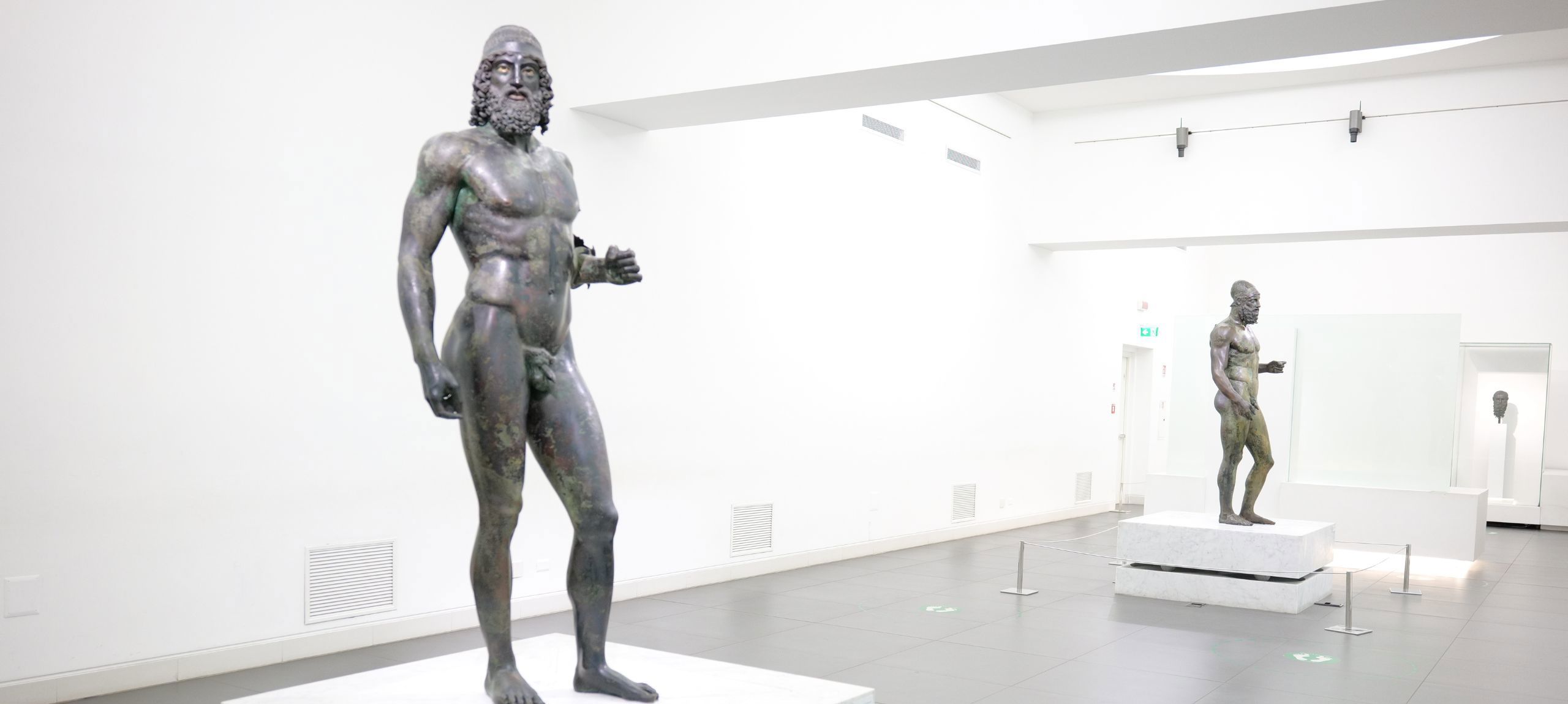
The Riace Bronzes are the museum’s most celebrated treasures and one of Calabria’s most iconic symbols worldwide. The statues were discovered in 1972 off the coast of Riace Marina, at a depth of approximately 8 meters. Identified as Bronze A and Bronze B, they depict two nude male warriors standing about 1.98 meters tall, originally equipped with a shield (held in the left hand), a spear (in the right hand), and a helmet.From a structural and artistic perspective, the statues display a sophisticated contrapposto stance with a cross-balanced rhythm: the body’s weight rests on the straight right leg, counterbalanced by the bent left arm; conversely, the flexed and forward-positioned left leg corresponds to the lowered right arm that once held the spear.