VIA Verona 2025 Supporter Masterclass: Consorzio Tutela Vino Custoza DOC
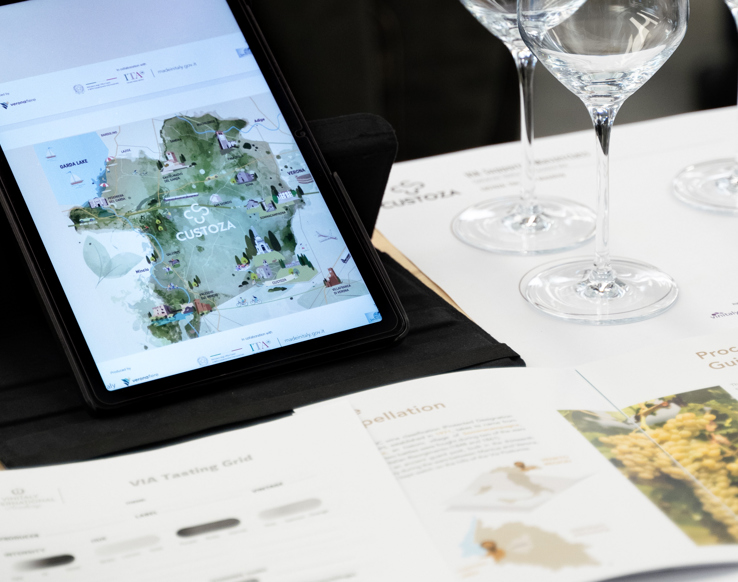
Roberta Bricolo, President of Consorzio Tutela Vino Custoza DOC joined the VIA students to present the 4th Masterclass, entitled "Custoza: The Art of Blending". From the southeast shores of Lake Garda, on morainic hills covering 9 municipalities, Custoza is a traditional blend of at least 3 local indigenous grapes. Roberta calls Custoza "the white wine of Verona, made from a unique blend".
The four main grapes for Custoza are: Garganega, Cortese, Trebbiano and Trebbianello. In the blending regulations, no one single grape may exceed 45% of the total blend. Winemakers can choose what percent of each grape to use and these 4 must make up at least 70% of the entire blend. Winemakers can add up to 30% of Chardonnay, Riesling, Pinot Bianco and/or Incrocio Manzoni. In recent years, the focus has been heading more to the 4 native grapes and much less use of the international varieties in the blends.
Historically, these grapes have been growing together in the Custoza regions, due to Verona being a traditional place of trade, with a great deal of movement from north to south and east to west passing through Verona. Native grapes from adjacent regions made their way to Custoza. The wine is produced in 3 main styles: vintage Custoza DOC, Custoza DOC Superiore, and Custoza DOC Riserva. The vintage DOC makes up 60-70% of the production and is the best selling, easiest drinking style. Superiore is more complex and sells primarily to restaurants, with Riserva being the smallest production and smallest market. Most Custoza is sold domestically, although it is exported to 35 countries, with the biggest market in Germany.
In the past ten years, producers have begun to look at the potential for ageing. Even the fresh young vintage can age up to 5 years if it is good quality. The Superiore and Riserva styles can age very well and are beginning to be recognised for their potential. Almost all of the wines are made entirely in stainless steel tanks. Pre-ferment cryomaceration is also in use, to maintain the freshness of the ripe grapes. For the Riserva style in particular, there is some very careful use of old oak. However, Roberta maintains that the best expression of Custoza is pure, clean, fresh and made in neutral vessels.
Wines tasted (with remarks from Roberta):
1. Azienda Agricola Tamburino Sardo: Custoza DOC 2024. Bright, fresh, fruity. Sarah commented that Custoza is not aromatic, not terpene driven, not floral, so the pleasure comes from the fruit on the palate. Roberta pointed out that Lake Garda gives the wines "secret aromas" and the obvious drinkability of this style of wine also has a fresh, saline, balanced elegance.
2. Azienda Agricola Il Pignetto: Custoza DOC 2023. Brief period on fine lees, possibly with batonnage, strong reductive quality, notes of white pepper, rounded and soft on the palate with a slippery texture.
3. Monte del Frà: Custoza DOC Superiore 'Cà del Magro' 2022. Warmer, more alcohol, a hot vintage. Cru vineyard is 55 years old, there is more intensity and more concentration. Cement tank before bottling. Six months ageing in the bottles before release. Complex and textural with hydrocarbon and hazelnut on the nose. This wine has some Incrocio Manzoni and some Pinot Bianco in the blend.
4. Azienda Agricola Albino Piona: Custoza DOC Superiore 'Campo del Selese' 2021. A normal vintage, no extremes. Elegant, balanced wine with long expressive finish. Single vineyard, structural and textural, what Sarah called "a wine with tension" – oily texture, high acidity, lower alcohol 12.5%, rounded mouthfeel. Complex and ageable.
5. Azienda Agricola Cavalchina: Custoza DOC Superiore 'Amedeo' 2020. Smells like Riesling, some of the grapes frozen upon harvest to break up the cells within the grapes, reductive winemaking with Garganega, time on fine lees, bottled in May, 4 months ageing before release. "A nice example of a wine entering into a lovely stage of maturity", commented Sarah.
6. Azienda Agricola Gorgo: Custoza DOC Riserva 'Sub27' 2019. 'Sub27' is the name of the plot where they grow the Cortese. Rich, intense, high fresh acidity with the oily texture again – great tension, very impressive, potential for very long maturing. This is Roberta's winery, their focus is on Cortese, looking for a mineral note they can touch with a little spicy oak influence. This wine is released 5 years after bottling, retaining the salinity and minerality. Only 3000 bottles produced each year.
7. Le Vigne San Pietro: Custoza DOC Superiore San Pietro 2015, celebrating VIA's 10th anniversary. Golden color, rounded, yellow stone fruit dominant, a butteriness, a beeswax quality, beautiful freshness, a lovely tension between the volume and the oily texture and the acidity. Elegant.
Stevie Kim asked Roberta and Sarah to distinguish the white wines of Verona: Soave, Lugana, Custoza. Sarah replied Soave is so big, it's challenging, it's typically very dry but there was an oak phase. Now there is a trend toward a reductive style that makes the wines very restrained and Chablis-esque. Lugana is heading in a new aromatic direction and looking almost at a Sauvignon Blanc and Riesling note and higher alcohol. Custoza has the oily texture, a moderate alcohol level, a freshness and salinity and fruitiness that gives it so much drinkability.
Roberta challenged the students: "We are fighting to explain the potential and quality of Custoza, we were underestimated for many years, when we weren't ready to offer the best. The point is, now we are ready. We want you to try and taste our wines, talk about them, promote them, explain them to your customers".